
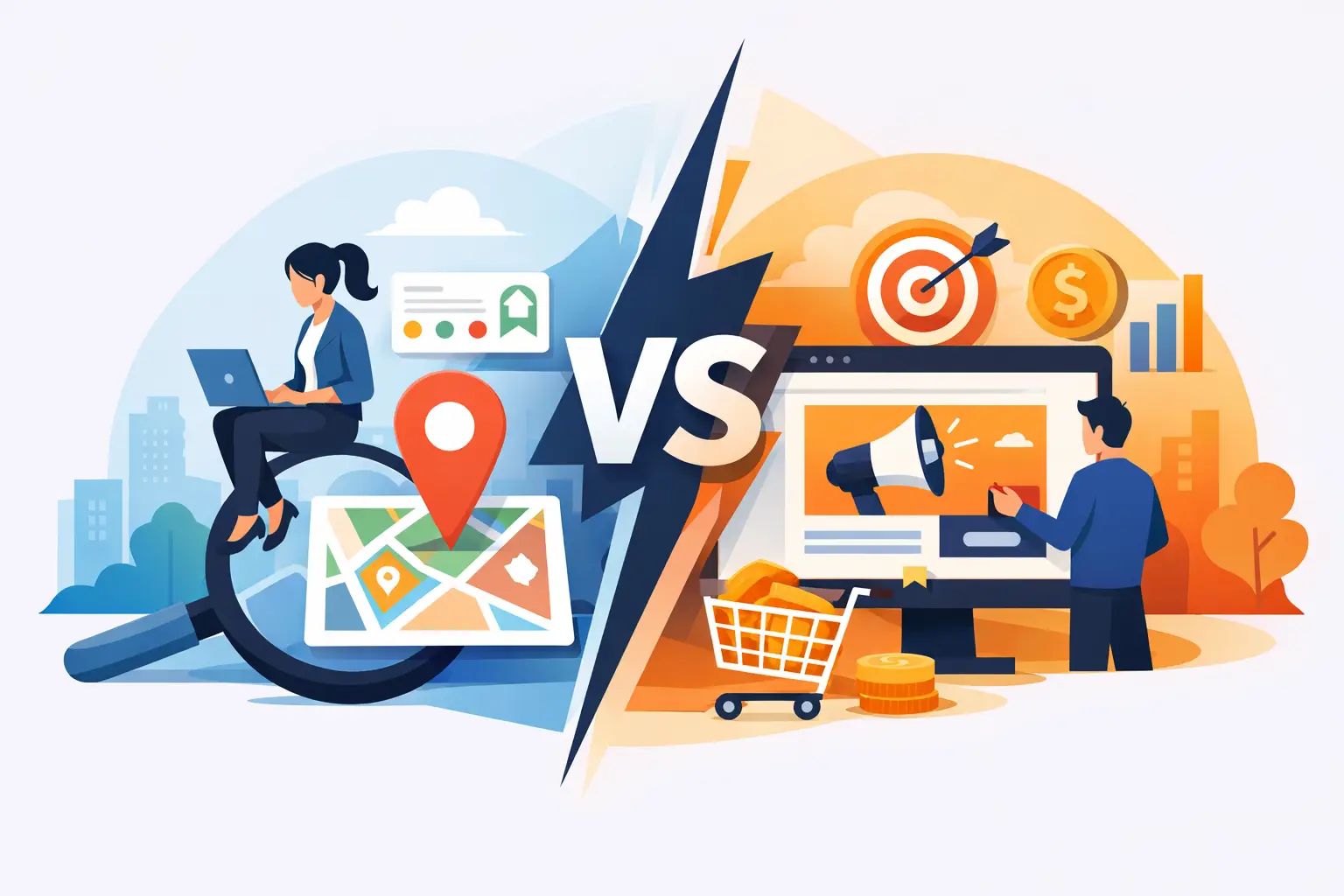
Most local businesses don’t have a traffic problem. They have a trust problem and a timing problem. You can buy clicks tomorrow, but if those clicks stop the second your budget pauses, you’re renting demand. That’s the real argument in local SEO vs paid ads. It’s not about which channel sounds smarter in a pitch deck. It’s about which one brings in qualified leads without turning your marketing into a permanent expense machine.
If you run a law firm, med spa, roofing company, landscaping business, dental office, or any other service company where one customer can be worth thousands, the wrong choice gets expensive fast. So let’s cut through the agency fluff and deal with the real trade-offs.
Local SEO vs paid ads: the core difference
Paid ads buy visibility. Local SEO earns visibility.
That sounds obvious, but the business impact is massive. With paid ads, you can show up at the top of search results quickly. If your campaign is tight, your landing page converts, and your market isn’t flooded with bigger competitors, you can generate leads right away. That speed matters, especially when you need pipeline now.
Local SEO works differently. You build search presence through your Google Business Profile, location pages, citations, reviews, on-site optimization, and local relevance signals. It usually takes longer, but once it gains traction, it can produce leads without making you pay for every single click.
One channel is a faucet. The other is a well. A faucet gives instant water, but only while you’re paying the bill. A well takes work to build, but it keeps producing.
For most local service businesses, the smartest decision is not ideological. It’s financial. How fast do you need leads, how competitive is your market, and how much risk can your budget absorb?
When paid ads make sense
Paid ads are not the villain. Bad paid ads are.
If you need leads this month, paid search can move faster than SEO. That matters when you’ve got a new location, a slow season, or a sales team that needs more at-bats now. For high-intent searches like “personal injury lawyer near me” or “emergency plumber,” paid ads can put you in front of someone ready to call.
The other advantage is control. You can target geography, time of day, device type, keyword intent, and service line. You can pause campaigns, increase spend, test offers, and shift budget based on what converts. That kind of flexibility is useful when you know your margins and track lead quality closely.
But here’s where a lot of businesses get burned. Paid ads only work when the math works. If your cost per click is high, your landing page is weak, your intake process is sloppy, or your agency is stuffing broad-match junk traffic into your account, you can spend a lot of money fast and still end up with garbage leads.
In competitive local markets, those clicks can get brutal. Legal, medical, financial, and home services businesses often pay premium rates for search traffic. If your close rate is low or your average job value is inconsistent, paid ads can become a very expensive guessing game.
When local SEO makes more sense
Local SEO is the better play when you want durable lead flow, stronger credibility, and lower acquisition costs over time.
People trust organic and map results differently than ads. They look at reviews, proximity, business details, and whether your company appears established. Showing up in the local pack and organic results creates a compounding effect. You are not just visible. You look legitimate.
That trust factor matters more than most agencies admit. A lot of prospects skip ads entirely, especially for services tied to risk, cost, or reputation. Someone hiring a criminal defense attorney, cosmetic dentist, or foundation repair company is not always clicking the first sponsored listing. They are comparing options and looking for signals that your business is the safe choice.
Local SEO also gets stronger with consistency. Reviews build. Citations reinforce legitimacy. Your website gains relevance. Your map presence improves. If the strategy is real and not just monthly reporting theater, your visibility can keep growing without your lead cost rising every time competitors increase their bids.
The downside is speed. Local SEO usually does not bail you out in 14 days. If your business needs immediate demand and you have zero search presence, SEO is a critical asset, but not an instant fix.
The real question: short-term lead flow or long-term leverage?
This is where most business owners get bad advice. Agencies love oversimplifying the answer because it helps them sell a package.
If you need fast lead generation and can afford testing, paid ads often win first. If you want lower dependency on ad spend and stronger long-term positioning, local SEO usually wins over time.
But “wins” depends on your business model.
A high-ticket law firm may justify aggressive ad spend because a single signed case can cover the month. A local HVAC company might use paid ads for urgent repair terms while building SEO around installation, maintenance, and broader geographic coverage. A med spa may rely on paid campaigns for promotions while using local SEO to dominate branded and near-me searches. The right answer changes based on margins, urgency, sales process, and market density.
That’s why local SEO vs paid ads should never be framed as a tribal debate. It’s a resource allocation decision.
Where local businesses waste money in both channels
The biggest budget leak is not choosing the wrong channel. It’s running either one badly.
Paid ads fail when campaigns chase volume instead of intent. You don’t need more clicks. You need more qualified calls, form fills, and booked appointments. If your keywords are loose, your conversion tracking is broken, or your ad spend is getting siphoned into low-intent traffic, your reports may look busy while your pipeline stays weak.
Local SEO fails when it’s treated like a checklist instead of an operating system. A polished profile and a few directory listings are not a strategy. If your pages don’t target real service intent, your reviews are stale, your location signals are inconsistent, and your competitors are actively building stronger authority, you won’t gain much ground.
This is also where business owners get agency fatigue. They pay retainers for activity, not outcomes. They get dashboards instead of direction. They hear that things are “trending positively” while the phone stays quiet.
That’s nonsense. Marketing should be accountable.
The strongest play is usually both, but not in equal amounts
For most service businesses, the best answer is a staged mix.
Use paid ads to create immediate lead flow and fast testing. You’ll learn which keywords convert, which offers pull, which locations perform, and what kind of intent actually turns into revenue. That data is valuable.
At the same time, build local SEO so you are not forever trapped in pay-to-play mode. Strengthen your Google Business Profile. Clean up citations. Build service pages that match actual search behavior. Generate reviews consistently. Improve local relevance and technical performance. Create search visibility that keeps working after the ad budget fluctuates.
The mistake is splitting budget evenly just because it sounds balanced. That’s not strategy. That’s indecision.
If you’re launching or need leads now, you may lean heavier on paid ads first. If you already have some traffic and want to improve margin, you may push harder into local SEO. If your market is ultra-competitive, you may need both at once but with very clear expectations for what each channel is supposed to do.
Paid ads should produce speed and testability. Local SEO should produce trust and compounding returns.
How to decide what deserves your budget first
Start with three numbers: customer value, sales cycle, and time-to-need.
If your average customer is worth a lot and prospects convert quickly, paid ads can make sense early. If your business benefits from repeat visibility, strong reputation signals, and long consideration windows, local SEO becomes more valuable.
Then look at your market. If cost per click is inflated and every competitor is bidding aggressively, pure paid acquisition can get ugly. If map results are weak and local organic competition is beatable, SEO may offer a better path to efficient growth.
Finally, get honest about your operations. If you don’t answer calls fast, if your front desk fumbles leads, or if your landing pages are generic, paid traffic will expose those problems instantly. If your website is thin, your reviews are neglected, and your location signals are messy, local SEO will struggle too.
No channel fixes a broken business process. It only amplifies it.
That’s why the businesses that win usually take a prove-it-then-scale approach. They start with what can generate measurable traction, fix bottlenecks fast, and invest more once the numbers hold. That mindset is a lot healthier than dumping money into a long retainer and hoping the agency figures it out.
Mostly Marketing takes that view for a reason. Local businesses are tired of vague promises. They want verified traffic, qualified leads, and a strategy that earns the right to grow.
If you’re deciding between local SEO and paid ads, stop looking for a universal winner. Look for the channel that best matches your cash flow, competition, and sales reality right now. Then build the other one before your competitors do.
Share this article
The featured image previews automatically when this link is shared.