
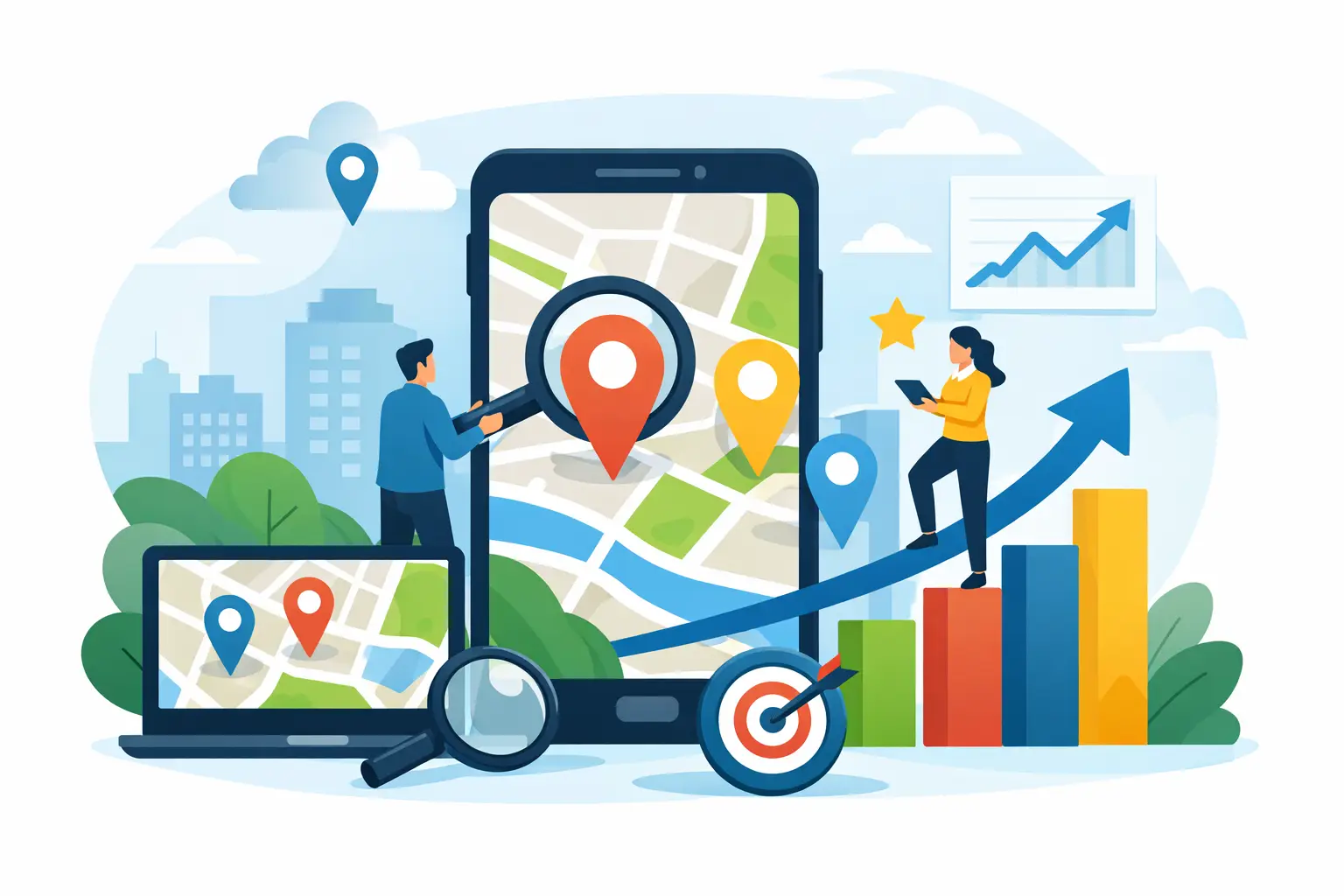
If your business is stuck below the map pack, you are invisible to the people most likely to call. That is the hard truth. When owners ask how to improve map pack visibility, they usually expect a trick. There is no trick. There is a stack of signals, and Google rewards the businesses that send the clearest, most consistent proof that they are relevant, trusted, and close by.
For local service companies, the map pack is not a vanity placement. It is prime real estate for high-intent searches. Someone looking for a personal injury lawyer, roofer, med spa, or HVAC company near them is not browsing for entertainment. They are looking to hire. If you are not showing there, your competitor gets the call.
How to improve map pack visibility starts with your Google Business Profile
Most businesses lose before the race starts because their Google Business Profile is half-finished, inaccurate, or built with zero strategy. Google is trying to match search intent with a real local business. If your profile is sloppy, incomplete, or vague, you are making that decision easy for them.
Your primary category matters more than most owners realize. It tells Google what business you actually are. Pick the closest match to your core revenue service, not the broadest label you think will catch more traffic. A personal injury firm should not hide behind a generic legal services category. A kitchen remodeler should not lead with general contractor if remodeling is the real money service. Secondary categories help, but the primary one does the heavy lifting.
Your business description is not where rankings are won, but it still matters. Write it like a serious operator, not like a brochure. Be specific about services, location focus, and who you serve. Then finish the basics most profiles ignore - accurate hours, service areas, business attributes, appointment options, and real photos of your team, office, trucks, projects, or facility. Stock images signal nothing.
Relevance beats volume when you want more map pack exposure
A lot of bad SEO advice treats local search like a keyword stuffing contest. That is how you waste time and still lose. Google wants confidence. Your job is to reinforce the same service and location signals across your profile, website, reviews, and citations.
That means your site cannot say one thing while your profile says another. If your Google Business Profile pushes drain cleaning in Dallas, but your homepage barely mentions drain cleaning and your service pages are thin, your relevance signal is weak. The businesses that win the map pack build alignment. Their profile categories, website copy, headings, reviews, and supporting citations all point in the same direction.
This is where many agencies fail clients. They chase generic traffic and call it progress. But generic traffic does not pay the bills. Ranking for the exact service and exact city where money is made is what moves revenue.
Service pages do more work than your homepage
If you serve multiple cities or offer multiple high-value services, one homepage is not enough. You need dedicated pages that clearly explain each service and each target market without spinning out low-value duplicate content.
A strong local service page should cover what you do, where you do it, why someone should trust you, and what action to take next. It should include proof - reviews, project examples, certifications, case-specific details, and location context. Thin pages built only to force a city keyword usually do not hold up.
There is a trade-off here. If you create too many weak pages, you dilute quality. If you create too few, you limit relevance. The answer is not more pages. It is better pages tied to real services and real local demand.
Reviews are not optional if you want to improve map pack visibility
Reviews influence click-through rate, trust, and local ranking signals. More importantly, they shape how buyers judge you before they ever hit your site. You do not need a fake-perfect five-star profile. You need steady review velocity, specific service mentions, and responses that show you are active.
Ask every satisfied customer. Not sometimes. Every time. Build it into your process after the job is done, after the case milestone, after the install, after the appointment. If your team is inconsistent, your review growth will be inconsistent too.
The wording in reviews matters because it adds relevance. A review that says, "Great company" is fine. A review that says, "They handled our emergency AC repair in Phoenix the same day" is better. You cannot script reviews word for word, and you should not. But you can ask clients to mention the service they received and the area they are in if they are comfortable doing it.
Respond to reviews like a business owner who cares about revenue, not like a corporate robot. Stay professional, mention the service naturally, and do not overdo it. Google sees activity. Prospects see trust.
Your local citations need consistency, not chaos
Citations still matter because they validate that your business exists where you say it exists. Name, address, phone number, website, and business details should be consistent across the web. If your listings are a mess, Google has less confidence in your location signals.
This becomes a bigger issue when a business has moved, changed phone numbers, rebranded, or worked with three different vendors who all submitted different versions of the company. Duplicate listings, old addresses, tracking numbers used carelessly, and inconsistent categories create unnecessary friction.
You do not need to be listed on every directory under the sun. You need the right core platforms, industry-relevant listings, and clean data. For lawyers, doctors, contractors, and hospitality businesses, niche authority sources often matter more than random directory volume.
Proximity matters, but it is not the whole game
Some owners hear that proximity is a major map pack factor and assume they are stuck. That is only partly true. Yes, a searcher closer to your office may see different results than someone across town. But proximity is not a free pass for weak competitors, and it is not a death sentence if your fundamentals are stronger.
If you operate from a legitimate office in your target market, you can still gain visibility by improving relevance and prominence. If you are trying to rank in a city where you have no real presence, that is tougher. Service area businesses can rank well, but they need stronger supporting signals because they are asking Google to trust an invisible address.
Behavioral signals tell Google whether searchers actually want you
A lot of local SEO talk skips what happens after you show up. That is a mistake. Google pays attention to engagement patterns. If users keep clicking your listing, calling your business, asking for directions, visiting your site, and not bouncing back to choose someone else, that is useful feedback.
You improve these signals by making your listing more compelling. Strong review counts help. So do sharp business photos, a complete profile, clear service positioning, and a website that loads fast on mobile. Most map pack traffic is mobile. If your site is slow, cluttered, or confusing, you are paying for visibility with no return.
This is where performance-minded businesses separate from the pack. They do not just ask how to rank. They ask what happens after the click. That is the right question.
Posts, photos, and updates will not save a bad profile
Yes, Google Business Profile posts and fresh photos can help show activity. They can improve buyer confidence, too. But do not treat these as magic levers. They support a strong profile. They do not fix a weak category strategy, poor reviews, thin website content, or inconsistent citations.
Use posts to highlight real offers, seasonal services, wins, or business updates. Add photos regularly, especially if you are in a visual industry like landscaping, remodeling, med spa, or hospitality. If you are a law firm or financial practice, team credibility and office imagery matter more than generic graphics.
The point is not to check a box. The point is to create a profile that looks active, legitimate, and worth contacting.
Track rankings by location, not by ego
If you want to know whether your map pack visibility is improving, stop relying on one search from your office computer. Local results vary by location, device, search history, and intent. You need grid-based local rank tracking or comparable visibility data that shows how you perform across your service area.
This is where real strategy beats agency theater. A pretty report that says impressions are up means nothing if calls are flat. Track map pack coverage, profile actions, phone calls, form fills, booked jobs, and lead quality. If your visibility improves but your lead quality drops, something is off. Either the targeting is too broad or the messaging is attracting the wrong searches.
Mostly Marketing takes that seriously because local visibility without business outcomes is just another expensive distraction.
The businesses that win the map pack send cleaner signals
If you are serious about how to improve map pack visibility, stop looking for hacks and start fixing signal quality. Build a complete profile. Choose the right categories. Align your website with your top services and cities. Get reviews consistently. Clean up citations. Track real performance, not vanity movement.
Google does not owe you placement because you opened a business. It rewards clarity, trust, and proof. The upside is simple - when you build those signals better than the market around you, the phone starts ringing from searches that were already happening without you.
Share this article
The featured image previews automatically when this link is shared.