
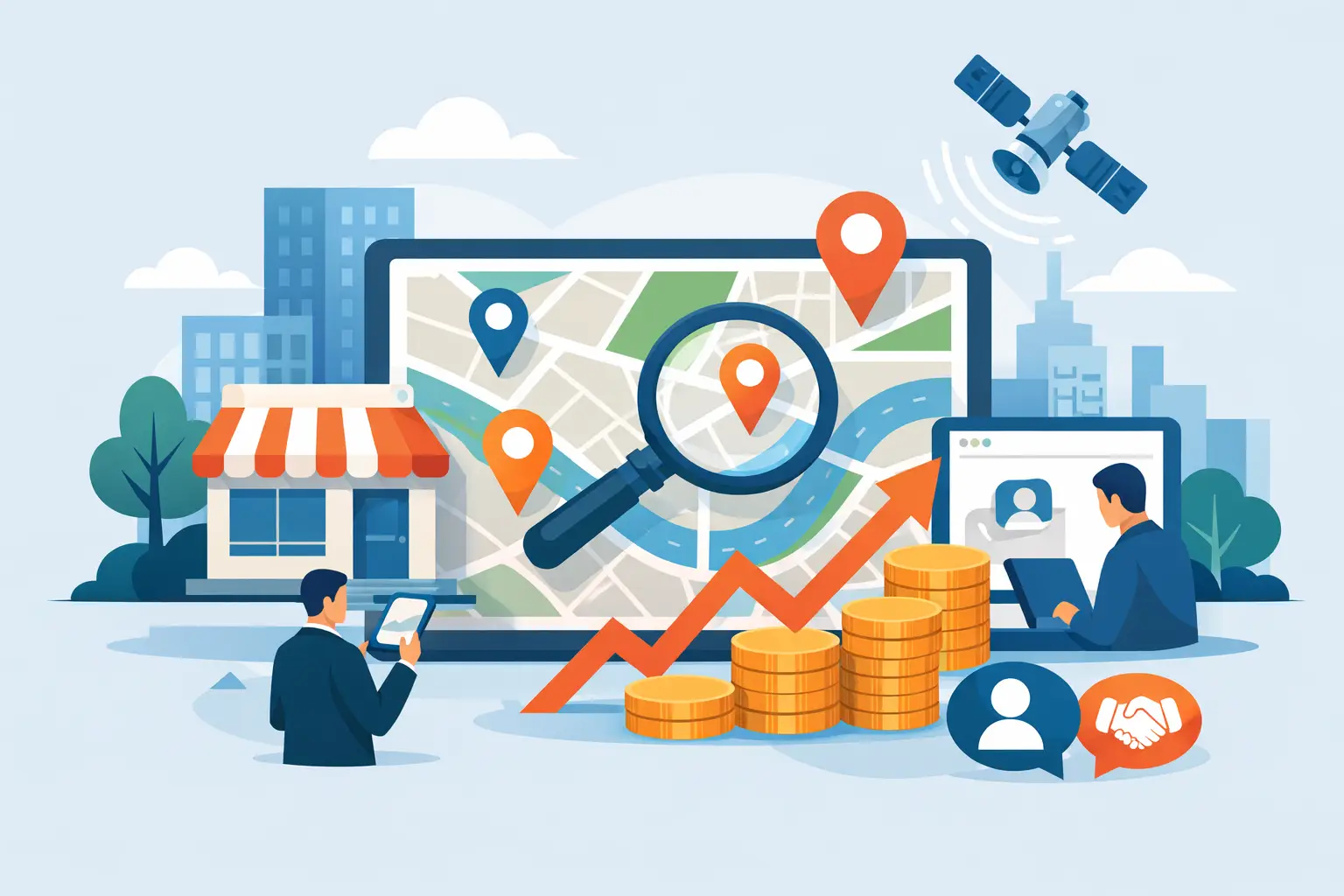
When a prospect asks ChatGPT, Gemini, Perplexity, or Google’s AI features who the best local provider is, a GEO agency helps make sure your business has a credible chance of being named. That matters because the buyer may never reach page two, or even page one, of traditional search results. They may get an answer, compare two or three options, and make a call.
For a law firm, contractor, medical practice, or financial advisor, this is not a branding exercise. It is a lead-generation problem. If AI systems cannot find, understand, verify, and confidently reference your business, your competitors get the recommendation while you keep paying for marketing reports that do not produce booked jobs.
What Is a GEO Agency?
A GEO agency specializes in generative engine optimization. The job is to improve how a business is discovered, interpreted, and cited by AI-powered search experiences and answer engines.
Traditional SEO is still part of the equation. You need a healthy site, useful pages, local relevance, reviews, authority, and strong technical foundations. But GEO goes further. It asks a different question: when an AI engine assembles an answer to a real customer question, is your business one of the sources or recommendations it can trust?
That requires more than sprinkling keywords onto service pages. AI systems look for clear entities, corroborating third-party information, topical expertise, consistent business facts, accessible content, and proof that your company is a legitimate answer to a specific need.
A good GEO program does not replace SEO. It makes your search presence more useful in the places where search behavior is moving.
Why Local Service Businesses Cannot Ignore AI Answers
Local buyers rarely search with one neat keyword anymore. A homeowner might ask, “Who handles emergency foundation repair near me?” A business owner might ask, “What should I look for in a commercial litigation attorney?” A patient may ask which local provider treats a specific issue and accepts their insurance.
Those questions carry far more purchase intent than a vague search such as “foundation repair” or “lawyer near me.” They also give answer engines room to recommend businesses based on context, reputation, specialization, proximity, and supporting evidence.
That is the opportunity. It is also the risk.
If your online presence is thin, inconsistent, or generic, AI has little reason to surface you. A polished homepage alone will not solve it. Neither will a monthly blog written for imaginary readers. You need a defensible footprint that connects your location, services, expertise, proof, and reputation.
The payoff is not just visibility. It is earlier access to demand. You can show up when someone is still deciding who is qualified, before they turn the search into a price-shopping exercise.
What a GEO Agency Should Actually Do
Do not hire an agency because it added “AI” to a tired SEO package. Ask what changes they will make, what evidence they will track, and how that work connects to leads.
A serious GEO agency starts with entity clarity. Search engines and answer engines need to understand exactly who you are: your business name, locations, service areas, primary services, practitioners or leadership, credentials, differentiators, and relationships to relevant local topics. Conflicting addresses, vague service descriptions, duplicate listings, and outdated profiles create uncertainty. Uncertainty kills visibility.
Next comes content built around real decision questions. That means pages that answer high-value questions with specifics, not 800 words of recycled filler. A roofing company needs content that explains storm damage claims, repair-versus-replacement decisions, material options, and local permitting realities. A law firm needs clear practice-area depth, case-type guidance, attorney credentials, and answers that help a prospective client evaluate fit.
Third-party validation matters just as much. Citations, industry profiles, local listings, review signals, news mentions, association references, and accurate data across trusted sources give machines more confidence in your claims. You do not need random directory spam. You need relevant, consistent evidence.
Finally, the agency should strengthen the technical and measurement layer. Structured data, crawlability, page architecture, conversion paths, call tracking, form attribution, and visibility monitoring are not glamorous. They are where good strategy either becomes accountable or disappears into a spreadsheet.
GEO Is Not a Shortcut Around Authority
Here is the uncomfortable truth: no one can guarantee that ChatGPT or Google will mention your business in every answer. The platforms change, citations vary, and results can be personalized by location and query wording.
Anyone selling permanent AI placement is selling fantasy.
What can be improved is the probability that your business is understood and selected as a trustworthy source across relevant queries. The strongest GEO campaigns build durable signals instead of chasing a one-week trick. That includes authoritative service content, accurate entities, review quality, local prominence, and credible external references.
This is why the cheapest provider is usually expensive. If the work consists of automated articles, low-quality backlinks, and a generic dashboard, you are paying for activity, not advantage. The report may look busy. Your calendar will not.
The GEO Agency Test: Ask Better Questions
Most business owners have agency fatigue for a reason. They have heard promises about rankings, impressions, and awareness while watching qualified leads stay flat. The fix is not blind trust in a newer acronym. The fix is better accountability.
Before you sign, ask how the agency identifies the questions your best customers ask answer engines. Ask which entity and citation gaps they found. Ask how they distinguish visibility growth from revenue growth. Ask what they will measure beyond keyword positions.
A credible partner should be able to explain the work in plain English. They should show you where your business information is weak, which competitors own the conversation, what pages or profiles need attention, and how progress will be verified.
Be cautious if the proposal is locked into a rigid package before anyone has audited your market. A personal injury firm in a crowded metro area needs a different strategy than a regional HVAC company with multiple service areas. The right scope depends on competition, site condition, reputation, geography, sales capacity, and the value of a new customer.
Measure the Business Result, Not the Marketing Theater
GEO visibility can be measured, but measurement must be honest. AI results are volatile and query-dependent, so a screenshot of one favorable response proves very little. Look for trends across a defined set of commercially relevant prompts, locations, and platforms.
Then connect that visibility to the metrics that keep the lights on: qualified organic visitors, calls, form submissions, consultation requests, booked appointments, lead quality, close rate, and revenue. If an agency cannot connect work to those outcomes, it is asking you to fund an experiment without a scoreboard.
There is also a timing trade-off. Foundational cleanup, entity work, and content upgrades can create early gains, especially where competitors are asleep at the wheel. But durable authority takes time. A competent agency will not pretend otherwise. It will prioritize the fastest meaningful fixes while building the assets that compound over months.
Where GEO Fits With SEO, Local Search, and Paid Media
The best growth strategy is rarely one channel. GEO works best when it is connected to strong local SEO, conversion-focused website pages, reputation management, and paid search that fills immediate demand gaps.
Paid ads can generate leads fast, but the cost rises when every competitor is bidding on the same urgent searches. SEO and GEO can lower your dependence on rented traffic by making your business easier to find and easier to trust. Review management reinforces both, because prospects and answer engines use reputation as a credibility signal.
The practical move is to identify where you are losing demand right now. If calls are needed this month, paid media may have a role. If your local visibility is weak, listings and review systems may be the priority. If your competitors are being referenced in AI answers and you are invisible, GEO becomes a clear gap to close.
A good agency does not force every business into the same service menu. It diagnoses the leak, fixes the leak, and proves whether the fix is producing better opportunities.
The businesses that win this shift will not be the ones making the loudest AI claims. They will be the ones with clear proof, useful answers, consistent local authority, and a marketing partner willing to be judged by calls, consultations, and revenue.
Share this article
The featured image previews automatically when this link is shared.