
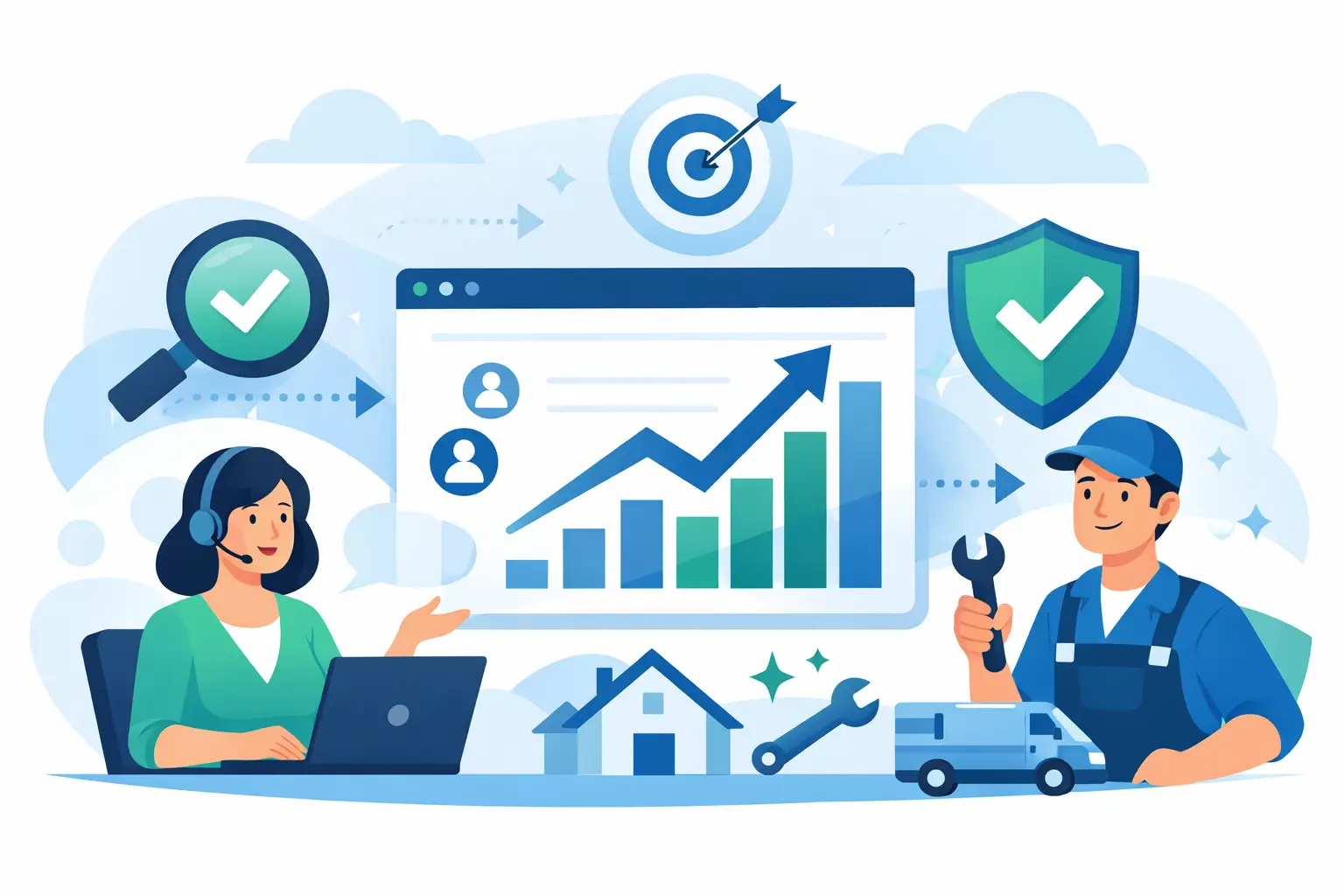
Most service businesses do not have a traffic problem. They have a trust problem. They have been sold charts, impressions, click volume, and bloated reports that say everything except the one thing that matters - did real prospects show up, and did those visits turn into calls, forms, and booked work? That is why verified traffic for service businesses matters. It puts pressure back where it belongs: on traffic quality, source transparency, and business outcomes.
What verified traffic for service businesses actually means
A lot of agencies use the word traffic as if all visits are equal. They are not. A random click from the wrong geography, a low-intent visitor who bounces in five seconds, or a bot-triggered session has no business being counted as progress.
Verified traffic for service businesses means the visits can be traced, qualified, and measured against real buying intent. You know where they came from. You know they match your service area. You know they are human. And you can connect those visits to meaningful actions like calls, estimate requests, consultation bookings, chat starts, and high-intent page views.
That distinction matters more for service companies than almost anyone else. A local law firm does not need 10,000 anonymous visitors. It needs the right 100. A roofing company does not win on vanity metrics. It wins when homeowners in the right ZIP codes land on the right pages and take the next step.
Why most traffic reporting is built to hide weak performance
The standard agency playbook is simple. Flood the report with activity, avoid hard attribution, and keep the client focused on movement instead of outcomes. Rankings went up. Sessions increased. Reach expanded. Great. What did that produce?
If you run a med spa, HVAC company, dental practice, landscaping firm, or personal injury office, you have probably seen this movie before. Spend goes out every month. Reports arrive on time. Revenue impact stays fuzzy.
That happens because unverified traffic is easy to inflate and hard to challenge. It lets agencies lean on top-of-funnel noise while dodging the harder question of lead quality. Service businesses pay the price because bad traffic does more than waste ad dollars. It wastes intake time, sales follow-up, scheduling capacity, and owner attention.
Verified traffic forces accountability. It strips away the comfortable gray area agencies hide inside.
What counts as verification
Verification is not one metric. It is a standard.
At minimum, traffic should be tied to a clear source, filtered for obvious junk, aligned to your target geography, and observable through behavior that suggests real intent. That might include repeatable search visibility, visits to money pages, call clicks from service pages, map interactions, form starts, form submissions, and call tracking tied back to specific campaigns or content.
For some businesses, verification also means matching traffic against device patterns, time on site, scroll depth, and conversion paths. For others, especially local service brands, it means confirming that visitors are coming from the areas you actually serve and are landing on pages tied to services you actually want to sell.
There is some nuance here. Not every qualified buyer converts on the first visit. Some people research, leave, come back, and call later. So verified traffic is not the same as instant leads. It is better understood as traffic with evidence behind it - traffic that gives you a rational basis to invest more because the audience and behavior are real.
The business case: why owners should care
If you are buying marketing to generate jobs, cases, appointments, or consultations, verified traffic changes how you make decisions.
First, it reduces wasted spend. When you know which sources produce real visitors with buying intent, it gets easier to cut the channels, keywords, and campaigns that look busy but do nothing.
Second, it improves forecasting. Reliable traffic quality creates cleaner conversion data. Cleaner conversion data makes it easier to estimate lead volume, staffing needs, close rates, and customer acquisition cost.
Third, it protects you from agency theater. You do not need another monthly presentation explaining why low-quality clicks are somehow a long-term win. You need enough visibility to tell whether the machine is producing demand or just consuming budget.
For high-value service businesses, that difference is massive. One retained legal client, one major outdoor build, one full-arch dental case, or one ongoing commercial maintenance contract can justify aggressive growth spend. But only if the traffic feeding that growth is real and relevant.
Where verified traffic for service businesses comes from
Search is still the strongest place to start because intent is already present. When someone searches for a service near them, compares providers, asks a direct question, or looks for pricing and availability, they are not casually browsing. They are moving.
That does not mean every search channel performs equally. Organic search, local map visibility, answer engine placement, voice search exposure, branded search suggestion visibility, and tightly controlled paid campaigns all play different roles. The right mix depends on your market, timeline, average deal value, and how competitive your niche is.
A local plumber with urgent demand patterns may need fast-response paid search alongside local SEO. A wealth management firm may benefit more from authority content, entity reinforcement, and answer-driven search visibility that earns trust before the first call. A personal injury practice may need aggressive local intent capture but tighter filtering to avoid low-value or out-of-market leads.
The point is not channel worship. The point is source transparency. If traffic cannot be explained, segmented, and tied to intent, it should not be trusted.
How to judge whether your traffic is real or just expensive
Start with the obvious question your agency probably hopes you never ask: can you show me where the visitors came from and what they did next?
If the answer is vague, that is a problem. If reporting stops at impressions, clicks, or blended traffic totals, that is another problem. If your “growth” includes traffic from outside your service area, irrelevant blog visitors, or pages that never produce leads, you are probably looking at padded performance.
Real evaluation gets more specific. Which service pages attract qualified sessions? Which keywords or search themes lead to calls? What percentage of traffic is from target cities? Which channels produce first-time visitors who actually convert? Where are people dropping off? Which traffic sources assist conversions even when they are not the final touch?
You do not need a PhD in attribution. You just need reporting that respects your money.
The trade-off: verified traffic is stricter, and that is the point
Some owners hear “verified” and assume it means smaller numbers. Sometimes it does.
That is not a downside. It is the cleanup.
Once junk traffic, weak sources, broad targeting, and soft reporting get stripped out, the numbers may look less flattering on paper. Good. Smaller truthful numbers beat inflated nonsense every time. You can build from truth. You cannot scale fiction.
This is also why performance-first agencies tend to be more flexible in how they work. If you are serious about verified traffic, you need room to adjust sources, landing pages, targeting, and conversion flow based on live performance. Rigid service packages get in the way. So do long retainers with no proof requirement.
That is one reason more service businesses are moving toward models that prove results first, then scale. It is not just about skepticism. It is about control.
What better traffic should lead to
Verified traffic is not the finish line. It is the filter that improves everything after it.
When quality improves, your close rate usually gets easier to read. Your intake team has fewer junk leads to sort through. Your follow-up process gets cleaner because the inquiries are more relevant. Your website conversion work gets smarter because you are optimizing for actual buyers instead of random visitors. Over time, even your reviews and referral cycle can improve because the right traffic tends to produce better-fit customers.
That compounding effect is where the real money is.
For agencies built around accountability, this is the standard, not the pitch. Mostly Marketing is one of the few willing to lean into that pressure because verified visitors and targeted demand are easier to defend than agency fluff. That is how it should be.
What to ask before you spend another dollar
Before you renew anything, ask for proof that your traffic is human, relevant, local when needed, and connected to meaningful actions. Ask which sources generate buying intent, not just visits. Ask what gets filtered out. Ask how performance changes get made in real time instead of buried in next month's report.
If those questions make your vendor uncomfortable, you already have your answer.
Service businesses do not need more marketing noise. They need demand they can verify, trust, and turn into revenue. Start there, and every growth decision gets sharper.
Share this article
The featured image previews automatically when this link is shared.