
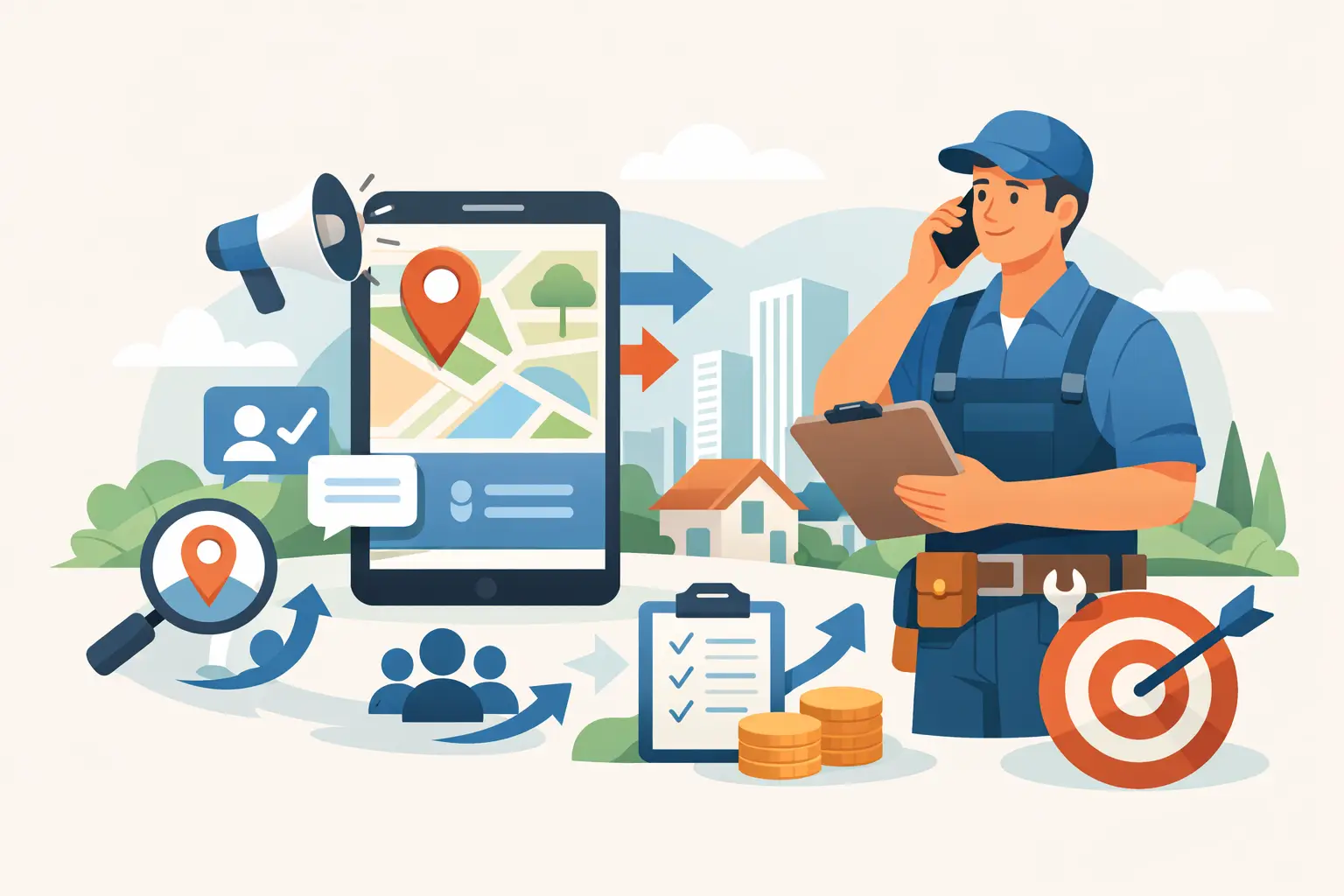
If your phone is quiet, your pipeline is inconsistent, and your agency keeps talking about impressions instead of booked jobs, you do not have a traffic problem. You have a lead generation problem. Business owners searching for how to get more local service leads usually do not need more marketing noise. They need a system that puts them in front of ready-to-buy prospects, converts that attention into calls or form fills, and proves what is actually working.
That is the part many local businesses get wrong. They spread budget across random tactics, buy vague SEO retainers, boost a few social posts, maybe run some ads, and hope demand shows up. Hope is not a strategy. If you want more local leads, you need tighter search visibility, stronger trust signals, and zero friction between intent and action.
How to get more local service leads without wasting budget
The fastest way to lose money is to chase volume instead of buying intent. A thousand untargeted clicks are worth less than ten searches from people in your service area who need your service now. That is why local lead generation starts with search behavior, not vanity metrics.
When someone needs a roofer, personal injury lawyer, med spa, HVAC company, or landscape designer, they usually do not start with your brand name. They search by problem, service, urgency, and location. If you are not visible at that moment, your competitor gets the call. If you are visible but your reviews are weak, your website is slow, or your contact process is clunky, you still lose.
This is where most agencies hide behind jargon. They make activity sound like progress. You need the opposite. You need to know which channels produce qualified leads, which pages convert, which searches trigger action, and where prospects drop off.
Start with buyer intent, not broad traffic
Not all local searches are equal. "Kitchen remodel ideas" is curiosity. "Kitchen remodeling contractor near me" is commercial intent. "Emergency plumber open now" is money on the table.
If your strategy treats those searches the same, you will burn time and budget. The goal is to build visibility around bottom-of-funnel searches first, then expand. That means your service pages should target high-intent phrases tied to actual buying behavior, not generic blog topics your competitors copied from one another.
For most local service businesses, the highest-value searches combine three things: service type, geography, and urgency. You want to appear when people are close to making a decision, not just browsing. A local law firm needs pages for specific case types in the markets it serves. A contractor needs service-specific pages, not one generic "services" page that says everything and sells nothing.
This is also why local SEO still matters. Not because it is trendy, but because maps, local packs, and geographically relevant organic results capture intent that is already formed. The lead exists. Your job is to intercept it.
Your Google Business Profile is a lead asset, not a listing
Too many businesses treat their Google Business Profile like a digital business card. It is not. It is one of the highest-leverage lead assets you have.
An incomplete or neglected profile sends the wrong message fast. Missing service categories, weak descriptions, outdated hours, bad photos, and no review strategy all suppress trust. In competitive markets, that kills lead flow before a prospect even clicks through to your site.
A strong profile does a few things well. It clearly reflects your primary services, reinforces your service area, shows active review velocity, and gives searchers confidence that you are legitimate and responsive. If you want more calls, your listing needs to look alive.
Reviews matter here, but not in the fake, reputation-management theater way. What matters is steady, recent, specific feedback that reflects your actual service quality. A business with 300 reviews from three years ago can lose to a business with 75 strong recent reviews that mention responsiveness, professionalism, and outcomes. Recency and relevance move decisions.
Your website should convert, not just exist
A lot of local business websites are expensive brochures. They look polished enough, but they do not close. If someone lands on your site and cannot tell within five seconds what you do, where you do it, and how to contact you, the page is underperforming.
Local lead generation pages should be built for action. That means a clear headline, service-specific copy, visible trust signals, tight calls to action, and contact options that fit urgency. Some prospects want to call. Others want a short form. In some industries, text messaging converts better than either. It depends on the buyer, the service, and the urgency level.
The copy matters too. Generic language like "quality service you can trust" is useless. It says nothing and sounds like everyone else. Strong pages speak directly to the problem, explain the outcome, reduce risk, and make the next step obvious.
There is also a hard truth here. More traffic will not fix a weak page. If your conversion rate is poor, scaling traffic just scales waste. Before you spend more to attract visitors, make sure the site can turn intent into leads.
Local citations still matter, but only if they are clean
Citation work is boring, which is exactly why it gets ignored. But if your business name, address, phone number, service categories, or service areas are inconsistent across the web, you create confusion for both search engines and prospects.
Clean citation profiles support trust and local relevance. Messy ones dilute it. This is not the sexiest part of lead generation, but it is foundational. If you skip the foundation, everything above it gets weaker.
That said, not every citation campaign is worth the money. Submitting your business to a giant pile of low-value directories is not strategy. Accuracy matters more than volume. You need the right business data in the right places, with no contradictions.
Paid search works, but only with discipline
A lot of local businesses jump into Google Ads because they want speed. Fair enough. The problem is they launch broad campaigns, bid on junk terms, send traffic to weak landing pages, and call the platform overpriced when leads do not materialize.
Paid search can absolutely generate local service leads, especially for urgent and high-value services. But it punishes sloppy execution. If your keyword targeting is loose, your ad copy is generic, and your conversion tracking is broken, the platform will happily spend your money anyway.
This is where discipline beats budget. Tight match types, strong negative keyword lists, local intent targeting, call-focused campaigns, and landing pages built for one action usually outperform bloated account structures built to impress in a report. Simpler often wins.
There is also a trade-off. Paid search can drive leads faster than SEO, but the meter is always running. Organic local visibility usually takes longer, but it compounds. The smartest approach for many businesses is not choosing one or the other. It is using paid search to capture immediate demand while building organic visibility that reduces dependence on ad spend over time.
Track real leads or stay confused
This is where the conversation gets blunt. If you do not know where your leads came from, which ones were qualified, and which ones turned into revenue, your marketing data is mostly theater.
Clicks are not leads. Leads are not sales. And not every phone call is worth the same amount. A landscaping company may value recurring maintenance leads differently than a high-end design-build project. A law firm may care more about signed cases than consultation volume. What counts as success depends on your business model.
That is why tracking needs to go beyond surface-level platform metrics. You need call tracking, form attribution, source visibility, and a feedback loop that tells you what became a real opportunity. Otherwise, budget decisions become guesswork.
This is also where many agencies get exposed. They are comfortable reporting traffic because traffic is easy to inflate. Revenue accountability is harder. A performance-driven partner should be able to show what is generating qualified demand, what is stalling, and what needs to change now, not three months from now.
The best local lead strategies win before the click
One overlooked angle in how to get more local service leads is shaping visibility earlier in the search journey. By the time someone types a direct service query, competition is already crowded. Getting in front of demand earlier, while intent is forming, can lower acquisition costs and improve conversion quality.
That is where search suggestion influence, review presence, local authority signals, and category ownership start to matter more than most businesses realize. If your brand appears consistently where buyers are forming preferences, you are not just competing for the last click. You are influencing the shortlist.
This is part of why local lead generation is not just about rankings. Rankings matter, but so does placement across the decision path. A business that shows up in maps, in relevant search suggestions, in strong branded review patterns, and on focused service pages has a much stronger lead engine than a business chasing one metric.
Mostly Marketing leans hard into that reality because business owners do not need prettier dashboards. They need more qualified demand with proof attached.
The local businesses that win are usually not the ones doing the most marketing. They are the ones doing less nonsense. They show up where intent is highest, remove friction, build trust fast, and track what actually turns into revenue. If that sounds simpler than what you have been sold, good. Simple is easier to measure, easier to fix, and a lot harder to fake.
Share this article
The featured image previews automatically when this link is shared.